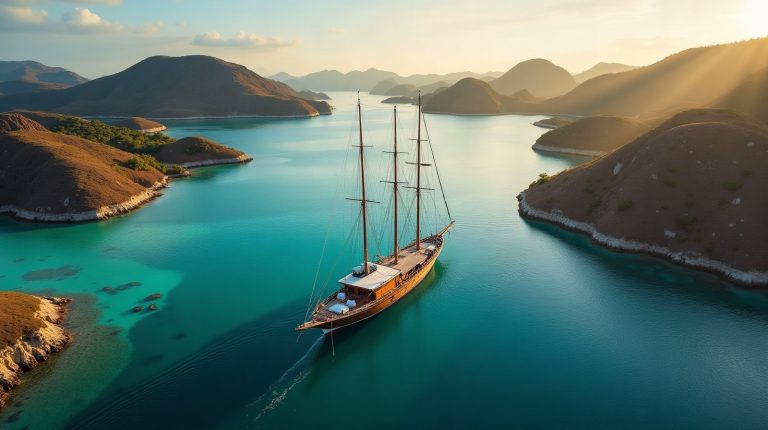
Is It Safe to Charter a Private Yacht in Indonesia?
- Premier charter companies adhere to or exceed international maritime safety standards, including SOLAS conventions.
- Experienced local captains and crew possess irreplaceable knowledge of currents, weather, and safe anchorages.
- Modern luxury yachts, particularly phinisis, are equipped with advanced navigation, communication, and safety equipment.
The warm, saline air hangs heavy with the scent of clove and damp earth. From the teak deck, you watch the sun bleed across the horizon, silhouetting the primeval form of a volcanic island against a sky of impossible color. The only sounds are the gentle creak of the rigging and the rhythmic lap of the Flores Sea against the ironwood hull. This is the profound appeal of an Indonesian archipelago explored by sea. Yet, for the discerning traveler, beyond this sensory immersion lies a crucial, practical question: In a nation of 17,000 islands and complex waterways, how can one be certain of their safety? The answer, I’ve found after years of reporting from these waters, lies not in broad generalizations, but in meticulous details and the caliber of your chosen operator.
Demystifying Maritime Safety in a Vast Archipelago
To comprehend safety in Indonesia, one must first appreciate its sheer scale. The country sprawls over 5,120 kilometers from east to west, encompassing more than 17,500 islands and a staggering 3.25 million square kilometers of ocean. Navigating this is not a task for the uninitiated. While the Indonesian Sea and Coast Guard (KPLP) patrol these waters, the primary layer of safety for any charter guest comes from the vessel and its crew. This is where a critical distinction must be made. The safety standards of a local fishing boat or a budget ferry service bear no resemblance to those of a top-tier private charter vessel. Elite operators, like those curated by Indonesia Yacht, voluntarily adhere to standards that often surpass local requirements, aligning instead with global best practices like the International Convention for the Safety of Life at Sea (SOLAS).
This sea changes with the moon and the season. GPS gives position; it does not warn you about the current wrapping a submerged pinnacle off Rinca. That knowledge is accumulated rather than downloaded, and it is the reason crew experience is a safety factor and not a marketing line. This local, generational expertise is a non-negotiable safety feature. A reputable charter company invests in captains who have not just passed exams, but who have spent decades reading these specific waters. They understand the nuances of the monsoon winds and the safe passages through reef systems that are, in some cases, still being accurately mapped. Your safety is directly proportional to the experience of the hand on the helm.
The Phinisi Paradox: Ancient Craftsmanship Meets Modern Redundancy
Many of the most sought-after charter experiences in Indonesia are aboard a phinisi, a traditional two-masted sailing ship. These vessels represent a seafaring tradition so significant it was inscribed by UNESCO as an Intangible Cultural Heritage of Humanity. Built by hand by the Konjo boat builders of South Sulawesi, often without formal blueprints, the image of ancient craft might seem at odds with modern safety. This is the paradox, and it’s where a discerning eye is crucial. A luxury charter phinisi is a hybrid masterpiece. Its soul and hull are born of centuries-old woodworking techniques, resulting in an incredibly sturdy and seaworthy vessel. But its heart and mind are thoroughly modern.
Below decks, the hand-hewn timbers house sophisticated engine rooms, typically with twin marine diesel engines from reliable manufacturers like Yanmar or MAN, providing redundant power. The bridge is equipped with a full suite of modern electronics: multiple GPS units, depth sounders, radar, and satellite communication systems (like Inmarsat or Iridium) for constant contact, regardless of how remote the anchorage. These yachts undergo rigorous and scheduled maintenance, including regular dry-docking for hull inspections every 18-24 months. Safety equipment is paramount, from SOLAS-grade life rafts and personal flotation devices to Emergency Position Indicating Radio Beacons (EPIRBs) and comprehensive firefighting systems. For a deeper understanding of these unique vessels, The Definitive Indonesia Yacht Guide offers an invaluable resource for prospective charter guests.
The Human Element: Why Your Crew is Your Greatest Safety Asset
A gleaming yacht with the latest technology is only as safe as the people operating it. In the world of luxury charters, the crew is your most important safety feature. On a premier Indonesian charter, you can expect a crew-to-guest ratio that is often 1:1 or even higher. This isn’t just for delivering impeccable service; it’s for ensuring constant vigilance and operational readiness. The crew on a vessel from a top-tier fleet will hold internationally recognized certifications, such as the STCW (Standards of Training, Certification and Watchkeeping for Seafarers), which covers everything from basic safety and firefighting to first aid and survival techniques. The dive guides will be PADI-certified Divemasters or Instructors, trained in rescue scenarios and oxygen administration.
According to our charter specialist, Amelia Hayes, “When we vet a yacht for our portfolio, we spend as much time interviewing the captain and chief engineer as we do inspecting the vessel itself. We look for low crew turnover, investment in ongoing training, and a documented safety management system. A happy, professional crew is a safe crew.” They are the ones conducting daily checks on safety equipment, monitoring weather forecasts from multiple sources, and making conservative decisions about passage planning. They are trained to manage everything from a minor medical issue to a complex emergency scenario with calm professionalism. Their expertise is a fundamental component of the charter fee, a detail further explored in our Indonesia Yacht Pricing & Cost Guide.
Navigating Natural Phenomena: Currents, Weather, and Volcanoes
Indonesia’s geography is dynamic, a fact that contributes to its dramatic beauty and requires expert navigation. Concerns about currents, weather, and volcanic activity are valid but are effectively mitigated by professional operators. The currents, especially within the Komodo National Park, are powerful and legendary. They are driven by the massive exchange of water between the Pacific and Indian Oceans, known as the Indonesian Throughflow. A skilled captain doesn’t fight these currents; they use their intricate knowledge of tides and local flows to plan dives and passages safely, often timing arrivals at specific sites to the minute for slack tide. Weather patterns are generally predictable, with a distinct dry season (typically April to October) and wet season. Charter itineraries are designed around these seasons to ensure comfortable and safe sailing conditions. For example, the prime season for Komodo coincides with the calmest seas, while Raja Ampat’s best window is generally from October to April.
Situated on the Pacific Ring of Fire, Indonesia has over 120 active volcanoes. While this creates spectacular landscapes, it rarely poses a direct threat to maritime operations. Ash clouds, which can affect aviation, are monitored constantly by Volcanic Ash Advisory Centers (VAACs). A yacht captain will receive these reports and can easily alter an itinerary to avoid any area of concern, a simple matter in an archipelago with thousands of alternative islands and bays to explore. The government’s official tourism site, indonesia.travel, provides general updates, but the real-time, on-the-ground intelligence comes from your captain and the charter operator’s shore-based support team.
Onboard Health, Security, and Provisions
Beyond the operational aspects of the yacht, personal well-being is a key component of safety. Piracy, for instance, is a frequently raised concern that is largely misplaced. The hotspots for piracy, such as the Strait of Malacca, are hundreds of miles away from the primary luxury charter destinations of Komodo, Raja Ampat, and the Banda Islands, where the crime is virtually unheard of. Onboard security is focused on the safety and privacy of the guests.
Health is managed proactively. Reputable yachts are equipped with extensive medical kits that go far beyond a basic first-aid box, often including oxygen, defibrillators, and advanced wound care supplies. The crew is trained in medical first response, and for voyages in extremely remote areas, a satellite phone provides a direct link to shore-side medical advisory services or evacuation coordinators. Potable water is never a concern; it is either produced by high-capacity onboard watermakers or sourced from reputable bottled suppliers. Similarly, provisions are sourced from trusted vendors, and meals are prepared by professional chefs in immaculate, modern galleys, drastically reducing the risk of common travel-related illnesses. This controlled, private environment is, in fact, one of the safest ways to explore the more remote parts of the archipelago, ensuring that your adventure is not compromised by logistical or health-related worries.
Quick FAQ: Your Pressing Safety Questions Answered
What happens in a serious medical emergency at a remote location?
In the event of a serious medical issue, the crew initiates a clear protocol. They are trained in first aid and will stabilize the patient while the captain uses the satellite phone to contact the charter company’s 24/7 shore support and a medical evacuation service like MedAire. They will then proceed to the nearest viable airstrip or port, such as Labuan Bajo for Komodo or Sorong for Raja Ampat, to rendezvous with an evacuation team for transfer to an international-standard hospital in Bali or Singapore.
Are the yachts and my charter payment insured?
Yes. All commercially registered, reputable charter yachts carry comprehensive insurance policies, including Hull & Machinery and third-party liability (P&I). Furthermore, when you book your Indonesia yacht through a professional broker, your funds are typically held in a separate client account and only released to the yacht owner just prior to the charter, offering financial protection.
How do I know if a specific yacht has a good safety record?
Transparency is the hallmark of a safe operator. You should feel comfortable asking your charter agent for key documents. Request the yacht’s most recent survey report, a copy of its safety management system (SMS), and confirmation of the crew’s certifications. A premium operator will have this information readily available and will be proud to share it.
The question is not whether Indonesia is safe for a yacht charter, but rather how to ensure your charter is safe. The answer lies in diligence, research, and partnership with an operator who views safety not as a checklist, but as a culture. The archipelagic wonders of this nation—from the dragons of Komodo to the pristine reefs of Raja Ampat—are not just for the intrepid explorer; they are for any traveler who values profound experiences paired with an unwavering commitment to their well-being. The first step towards a secure and unforgettable journey is choosing the right partner. Explore the curated fleet of meticulously vetted vessels at Indonesia Yacht, and allow our specialists to craft an itinerary where your only concern is which idyllic bay to discover next.